Give your calves the best start with AHV
Calf rearing is the foundation of a healthy and productive future herd. The care given to calves during their early days is crucial, setting the stage for a strong, thriving herd in the future.
Many factors influence the success of calf rearing, impacting both the long-term health of the animal and its future performance. A calf’s health depends on a delicate balance between its immune system and environmental bacteria. When calves face stress or health problems, their energy issued to support the immune system instead of focusing on growth.
Health issues at this stage of life can have lasting consequences, such as lower milk yield or delayed finishing time. It is therefore essential to support calves from day one and throughout the post-weaning period.
The immunity gap
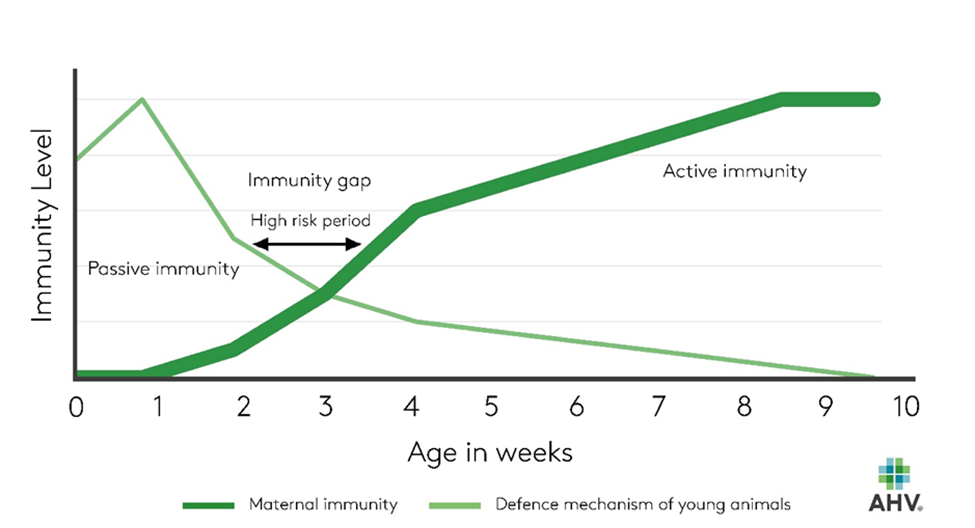
During the first few weeks, calves rely on passive immunity from colostrum, while their own immune system is still developing. By the time the calf is about 2 to 3 weeks old, this colostrum-derived immunity begins to decrease before the calf’s active immunity takes over completely, creating the so-called ‘immunity gap’. The AHV Calf Rearing Program aims to bridge this immunity gap and helps protect the calves during this vulnerable phase.
AHV Calf Start is the first step in this proactive program, supporting the immune system and promoting a healthy digestive tract. By improving nutrient absorption and tackling digestive problems, Calf Start helps calves thrive. It is administered by mixing 25 grams of powder into the calf’s milk twice daily during the first 14 days of life.
Addressing respiratory health
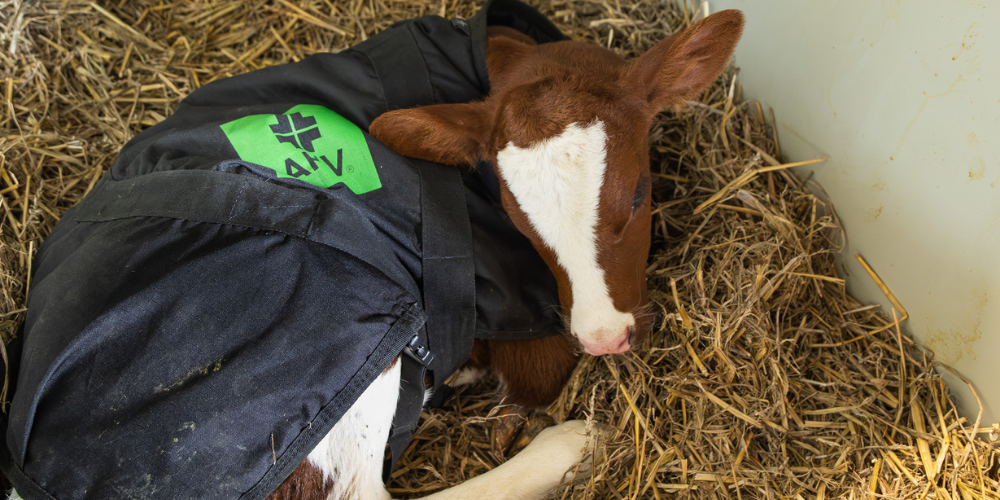
Respiratory problems in calves can lead to significant economic losses, as they often negatively impact the calf’s growth rate and overall performance. Studies show that in calves with respiratory problems, weight gain can be reduced by half over a month. Besides the immediate financial cost, respiratory problems can also negatively affect long-term productivity. Calves with early respiratory problems often produce 4% less milk in their first lactation and up to 8% less in their second lactation. In calves with recurrent respiratory problems, the decrease is even greater.
Managing weaning
Weaning is a stressful period for calves, as it makes them more vulnerable to health problems and often taking in less feed. This can slow growth or even cause weight loss, this is known as the ‘post-weaning growth dip’.
To minimize the effects of this growth dip and meet developmental goals, it is sometimes necessary to extend the rearing period. However, this leads to higher costs due to more labour, feed and time.
If growth targets are not met during the rearing period, heifers may not be ready for breeding at 15 months and for calving at 24 months. Supporting calves during weaning is crucial to maintain growth rate and reduce relapses.
The final stage of the proactive Calf Rearing Program is AHV Booster Powder. This product helps bridge the energy gap during weaning by boosting feed intake and improving rumen function. This gives the calf more energy, which supports both growth and immunity. Booster Powder is administered one week before weaning until two weeks, in an amount of 50 grams per calf, twice daily as a top dress.
Tackle calf rearing proactively with the AHV Calf Rearing Program. By addressing key issues, such as the immunity gap and growth dip after weaning, you can prepare your calves and your herd for long-term success.
AHV Calf Rearing
The AHV Calf Rearing Program focuses on the respiratory system, intestines and resistance of the calf for optimal rearing and build-up of its natural resistance.
Benefits Proactive Calf Rearing Protocol

Improved daily gain
Improved gut & lung health
Optimal support during weaning period
Proactive Calf Rearing Program
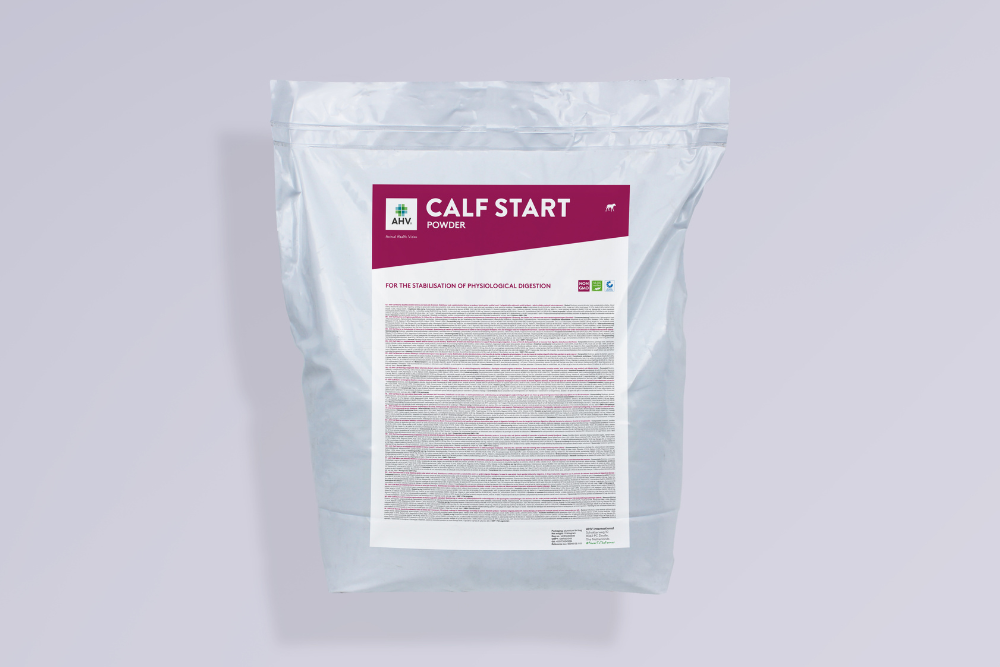
First 14 days of life
Calf Start
25 gr⁄ animal⁄ twice daily milk feeding
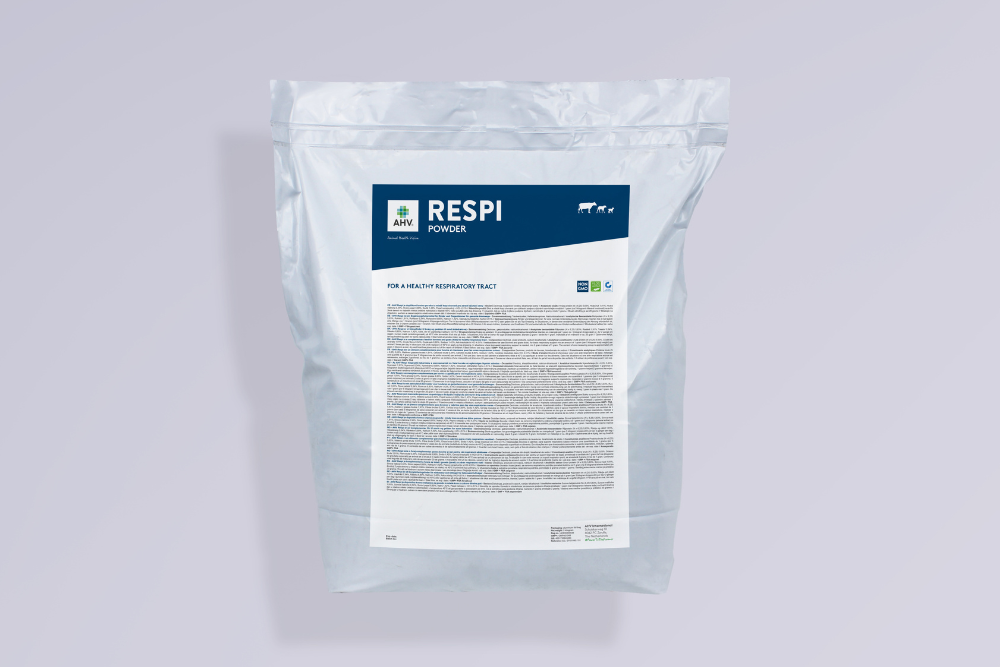
Day 15-28
Respi
10 gr⁄ animal⁄ twice daily milk feeding

From 1 week pre-weaning until 2 weeks post-weaning
Booster Powder
50 gr⁄ animal⁄ twice daily as top dress
Brooks KR, Raper KC, Ward CE, Holland BP, Krehbiel CR, 2011. Economic effects of bovine respiratory disease on feedlot cattle during backgrounding and finishing phases. The Professional Animal Scientist, 27(3).
Morrison, S., Scoley, G. and Barley, J., 2013. The impact of calf health on future performance. Veterinary Ireland Journal, 3(5), 264-268.
Bach A., 2011. Associations between several aspects of heifer development and dairy cow survivability to second lactation. Journal Dairy Science; 94, 1052-1057
Have a question?
Our experienced Farm Consultants and Technical Veterinary Experts are here to address any queries you have regarding your herd health.
Fill out our brief contact form to receive a call from our friendly team.

EN – Get in touch
"*" indicates required fields