
Digestive challenges in calves, how do they occur and what can you do about it?
The basics of digestion in calves
Newly born calves are pre-ruminants, equipped with four stomachs like adult cows, but with a smaller rumen. While the rumen develops, milk is digested in the abomasum with the shift from pre-ruminant to ruminant typically occurring between four and eight weeks of age.
What can go wrong?
Digestive challenges caused by unfavourable bacteria, can negatively affect the gut wall.
One of the primary ways bacteria cause trouble is by damaging the epithelial cells of the intestinal wall. This damage compromises the structural integrity of the digestive system allowing bacteria to enter the bloodstream and cause wider health challenges.
Damage to the epithelial cells also reduces the surface area available for nutrient absorption, decreasing the calf’s ability to extract essential nutrients from its feed.
How do digestive challenges impact calf growth?
With the integrity of the intestinal wall compromised and the surface area reduced, our young calf is more likely to experience a slowdown in their growth rate. Hindered nutrient absorption becomes a roadblock in their journey to gain weight and develop as expected.
This challenge concerning the intestines is illustrated in figure 1.
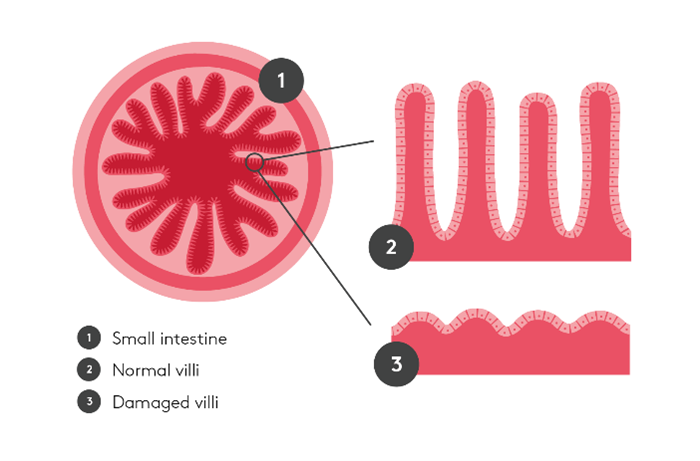
Figure 1: Intestinal wall lining(1).
Normal gut village(2), responsible for surface area enlargement are irreparably destroyed or made impenetrable due to scarring by unfavourable bacteria(3).
The advice from the AHV Ruminant Specialists
The advice from the AHV Specialists is to take steps to proactively support your calf through its first weeks of life.
1. Establish a Clean Start
Begin the story right by providing a clean and hygienic environment for the newborns. Clean pens, dry bedding, and a comfortable draught-free environment helps minimise the risk of exposure to unfavourable bacteria right from the get-go.
2. Colostrum – Liquid Gold
In the initial chapters of a calf’s life, colostrum is the hero providing an abundance of bioactive molecules that positively affect gut development and microbiota. Ensure that each calf receives a sufficient amount of this liquid gold within the first six hours of birth.
Shortly after birth, the absorption capacity is 100 percent, but after 6 hours it is already halved. The first ‘obtained’ resistance of the calf is completely via the colostrum. If the calf cannot make use of this resistance, the calf may be more prone to digestive challenges early on. The very first step to tackle digestive challenges is therefore to always quickly provide a good quality and quantity of colostrum to lay the foundation for a robust immune system.
3. Bridge the Immunity Gap
At 2 to 3 weeks old, the immunity provided by colostrum will have decreased before the calf has fully developed its own active immune system. To support calves through this high risk period and support the calf’s growth and development it is important to bridge this ‘Immunity Gap’ and support calves through this high risk period by bridging the immunity gap.
4. Support your calves digestive health with AHV Calf Start
To support the growth and development of strong, healthy calves, we recommend adding AHV Calf Start powder to your calf’s milk from birth through to 2 weeks of age.
Delivering a potent dose of immunoglobulins (antibodies) that support immunity and encourage the optimal development of the digestive tract. Calf Start helps the calf to absorb nutrients, protects the gut wall during periods of, or recovery from digestive disturbance (diarrhoea).
Calf Start not only encourages optimal growth and helps to stabilise digestion. It acts as a safety net during periods of immunity dips, ensuring your calf stays on a healthy growth trajectory.
AHV Calf Start is a complementary dietetic feed, dissolved in the calf’s milk at a rate of 25 grams per calf, twice per day for the first two weeks of life.
Calf Start is the first part of the AHV Calf Rearing Programme.
Take control of your calf rearing this year with a proactive approach, adopting the AHV Calf Rearing Programme to bridge the immunity gap and reduce the impact of the post-weaning dip.
Have a question?
Our experienced Farm Consultants and Technical Veterinary Experts are here to address any queries you have regarding your herd health.
Fill out our brief contact form to receive a call from our friendly team.

EN – Get in touch
"*" indicates required fields