
Fresh cow issues during summer
Warm weather can significantly impact fresh cows, those that have recently calved, due to their already stressed physiological state. Fresh cows naturally generate a lot of body heat through milk production, which means they can experience heat stress even at relatively low temperatures (≥ 20°C with high humidity).
Fresh cows are already in a vulnerable period after calving, with increased energy requirements. Heat stress exacerbates this deficiency, causing hormonal imbalances and reduced fertility. It also can reduces their feed intake, which in fresh cows results in a deep negative energy balance, their milk production drops, and they recover more slowly.
AHV’s Solution
Support uterine health & fertility this summer. Help your fresh cows stay healthy when temperatures rise by:
Improving conception rates
Reducing number of days open
Stimulating efficient placenta release after calving and improving uterus hygiene
The Protocol
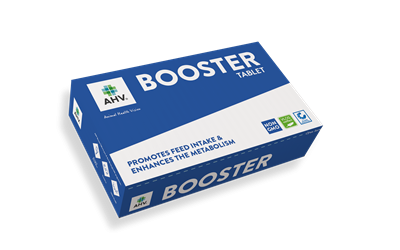
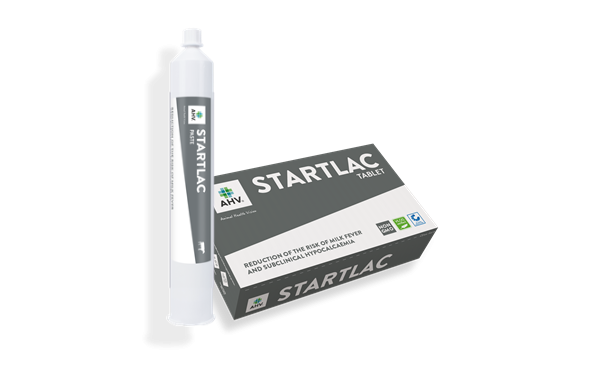
1x AHV StartLac Paste of Tablet
(repeat tablet after 12- 24 hours)
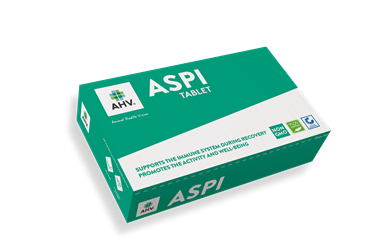
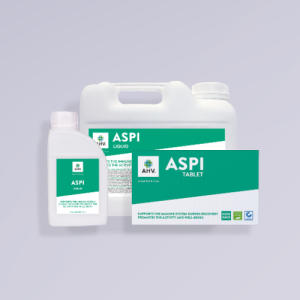
1x AHV Aspi Tablet
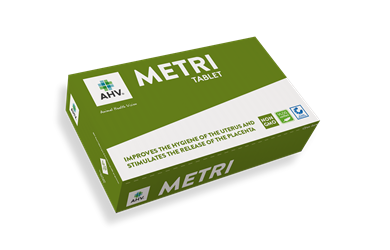
1x AHV Metri Tablet
(Re)active AHV products for Uterine Health & Fertility
These products are for cows at high risk of uterine health issues (active) or to support during uterine health issues (reactive).
Active – For cows at high risk of uterine health issues



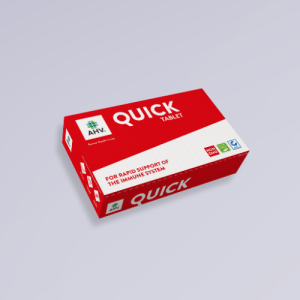
Reactive – Support during uterine health issues
Science & Validation
Backed by Science, Trusted in the Field
Recent field trials in the USA including 8 farms and 4,495 cows (2,240 AHV, 2,255 Control) showed that cows receiving the fresh cow protocol for uterine health & fertility had a:
- 34% reduction of metritis incidence (4.6% vs. 7.0%),
- 71% reduction of retained placenta incidence (0.4% vs. 1.4%)
- 7 lbs/hd/day increase in milk production for the first 100 DIM
- 1.9% increased first service conception rate (48.4% vs. 47.5%)
Compared to the control group.
For more information, contact your local Consultant.
Summer Support Video
5 tips for fresh cows
- Provide water to cows during calving
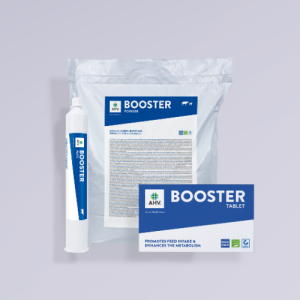
A cow in labor may not eat for up to 24 hours. Make sure there is enough drinking water available. After calving, support the cow by offering electrolytes in the drinking water, for example, Booster Powder.
- Keep the lactation ration fresh
A fresh cow faces many physical and metabolic challenges after calving that require a lot of energy. To meet this energy demand, it’s important that the cow eats well. You can stimulate this by offering a fresher, more palatable ration to fresh cows.
- Ensure sufficient ventilation
Calving uses a lot of energy, especially if temperatures are above 20°C (68°F). Provide sufficient natural ventilation and consider fans. Good air exchange reduces temperature.
- Maintain a hygienic environment
Warm and humid conditions increase bacteria and fungi growth. In an environment with many bacteria, health risks rise. To give fresh cows a good start to lactation, keep their surroundings clean.
- Milk the cow as soon as possible
Milk the cow quickly after calving to provide colostrum to the calf and protect udder health. Important: never leave colostrum standing warm. Bacteria grow rapidly in summer temperatures. Milk hygienically, cool the milk quickly, and provide colostrum to the calf within 2 hours.
Testimonials
Are you ready to make the switch?
Start your optimal Summer Support Today!
"*" indicates required fields
FAQ – Frequently Asked Questions
Do you have any questions about fresh cows? Would you like to know when it poses a risk to cows and in what stages of the life cycle you need to pay extra attention? Read our FAQ here!
How does summer and heat affect fresh cows?
Summertime can result in an extremely negative energy balance, particularly in fresh cows. The energy deficit causes the egg cells to develop less well and cysts to form, due to factors such as reduced hormone expression. The body temperature rises, the heat interval decreases, and heat is less clearly indicated. The uterine wall becomes acidic, reducing implantation.
Heat stress can reduce the fertilization rate (normally around 90%) to 55% and early embryonic mortality is higher. Fresh cows naturally generate a lot of body heat through milk production, which means they can experience heat stress even at relatively low temperatures (≥ 20°C with high humidity).
What effect does summer have on fertility in fresh cows?
Fresh cows are already in a vulnerable period after calving, with increased energy requirements. Heat stress exacerbates this deficiency, causing hormonal imbalances and reduced fertility. The quality of the eggs decreases and the uterus becomes acidic, which reduces the chance of successful fertilization and implantation. Heat becomes less visible and the fertilization rate can drop significantly.
Fresh cows naturally generate a lot of body heat through milk production, which means they can experience heat stress even at relatively low temperatures (≥ 20°C with high humidity).
How does it affect the water and feed intake?
Fresh cows drink up to twice as much during heat stress (from ~110 liters to ~200 liters/day) (milkcattlefarm.nl) Insufficient drinking water or water that is too warm limits recovery of feed intake and energy balance, which is crucial for milk production.
At temperatures above 20°C, their feed intake can already drop by ≥10%, with milk production falling by as much as 15–40%.
Fresh cows and energy in summer
Negative energy balance due to heat stress reduces the duration of estrus and egg quality, leading to lower fertilization rates (<55% versus normal ~90%). Fresh cows stand more often to lose heat, which leads to increasing hoof problems. Heat stress reduces their feed intake, which in fresh cows results in a deep negative energy balance, their milk production drops, and they recover more slowly. (source: Melkveebedrijf.nl)
A negative energy balance affects the cow’s immune system, as neutrophils, an important immune cell in preventing (udder) infections, are less able to do their job.
The activity of the immune cells decreases, increasing the risk of disease and infection.
Is your answer not here?
Can’t find an answer to your questions? Our advisors are happy to help!