
The impact of hot weather on fertility
Article three in the series of four articles on Energy & Metabolism
Each phase of a cow’s life requires a different health approach. Sometimes not enough attention is paid to fertility, even though studies have shown reproduction is a primary reason for culling (Bascom SS, Young AJ. 1998). Other events, such as a changing environment or high temperatures, can influence the cow’s fertility level.
Less active due to heat
At higher temperatures, cows are unable to release their heat. The ruminating process costs energy and generates heat, so to mitigate this issue, cows tend eat less during warm periods. A cows body aims to maintain a normal body temperature, and when this is not possible, body functions can be negatively impacted. Cows are less active during warmer times, which has a direct effect on the visual signs of the cow’s heat. Reduced activity means cows are less likely to jump on each other, which makes it more difficult for the dairy farmer to visibly detect a heat. Because milk production and resistance to health challenges are more important for the animal, the energy will be distributed to these processes. Decreased intake results in reduced energy, and the reproductive system will be the first to receive less energy.

Three weeks before insemination already a danger
The ovum develops in the period before the heat. If the cow has a high body temperature during this period, there is a chance that the egg cell is lower quality than normal. This reduces the chance of fertilization. Oocyte starts to mature as early as 85 days before ovulation. Therefore, ova are of a higher quality at the beginning of lactation. This results in an increased chance around day 56. The next heat is to start developing the follicle after calving. Hot conditions starting from 85 days before insemination can already have a negative effect. If fertilization is successful, the embryo has difficulty coping with an excessively high body temperature, resulting in more early embryonic death.
Energy plays an important role in good fertility
Milk production will be more efficient if the average number of days in lactation is loweraccording to Geert Opsomer of Ghent University. For ideal milk production, he recommends a herd have an average of 160-180 days in lactation. When a herd reaches an average of 200+ days in lactation, the production efficiency of the herd is lower. A cow is fertile every three weeks; insemination between day 30 and 50 uses the highest quality egg. Due to warmer temperatures and lower feed intake, cows are less able to maintain milk production and will use more fat reserves. As a result, after the peak, the milk production will drop faster. The long-term consequence of this is that cows will become fat when they begin to dry.
Less active due to heat
The roughage intake of a cow decreases during warmer periods, in order not to overheat. Reduced feed intake and increased respiration during warm periods reduce ruminal activity, resulting in lower saliva production and lower availability of the buffering bicarbonate. Cows already naturally produce bicarbonate and through their saliva keep the acidity (pH) of the rumen as stable as possible. Through rumination, a cow produces 2 kg of bicarbonate in its saliva every day. Therefore, ruminative activity is essential for supporting the animal throughout the entire period. If more acid is formed in the rumen than can be absorbed through the rumen wall, discomfort may occur. Highly productive animals in particular can suffer from this.
When to use AHV Booster for fertility?
The dairy industry regularly sees fertility challenges, which often originate from energy challenges. For example, think about cows that do not show signs of heat. This is often due to the fact that she is fighting other challenges or has not absorbed enough energy. . AHV’s farm advisors give advice based on the data available on the farm. If you see that a cow is dropping too fast in milk production or other key figures (e.g. fat/protein content), your farm advisor can offer a recommendation to address the imbalance in the cow’s energy. The farms that are trailing the AHV app see data that shows the energy balance has improved after utilizing AHV’s recommended protocol.
Are you curious how AHV’s solutions can contribute to animal health on your farm? Fill in the form below or click here to find your local farm advisor.
Proactive support around energy & metabolism
Below we show the protocol we recommend for optimal energy & metabolism. By clicking on the picture you will see more information about the product. However, we always recommend using the products in a program for optimal results.
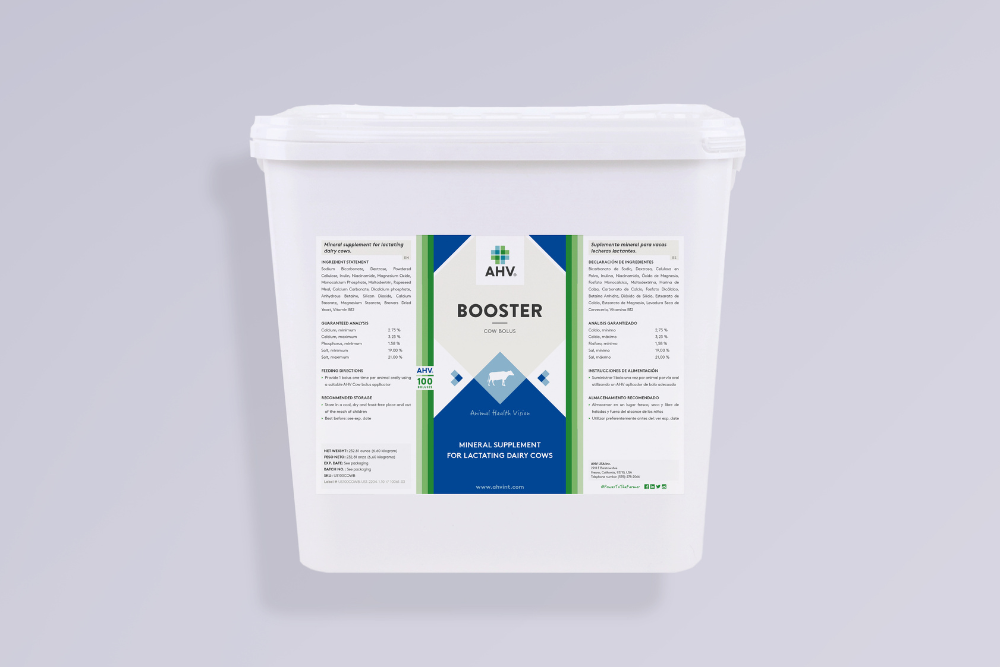
Booster Bolus
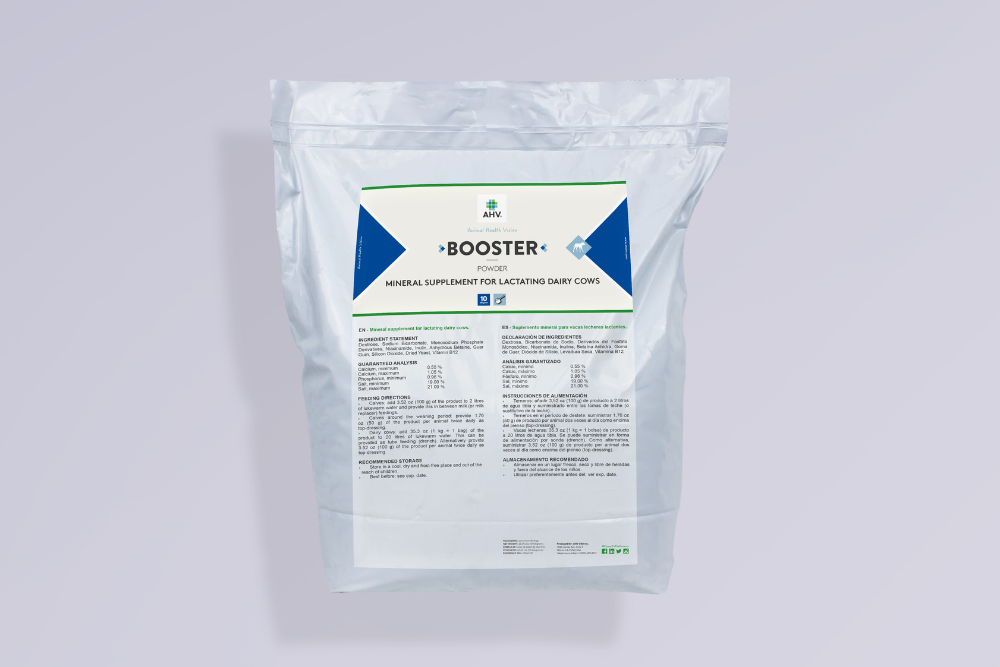
Booster Powder
Get in touch!
Would you like to be visited by an advisor to discuss the health challenges on your farm together? Our AHV Farm Advisor will be happy to visit you to jointly assess the health of your cows and come up with appropriate cow-specific advice.

US – Get in touch
"*" indicates required fields