
Extending lifespan through optimal udder health
By Dr. Andre Rigo – AHV International
Cows can perform at top level for many years, if given the opportunity. An older dairy herd is also economically beneficial. Several scientific studies show that 50% to 70% of cows are forcibly disposed of around the age of four or five years (Gosselink et al., 2008). The three main reasons to dispose cows early from the herd are poor udder health, reduced fertility, and low milk production. Extending lifespan is sustainable and economically beneficial. What needs to be done to increase the longevity of your livestock?
Culling is an important management tool in dairy herds, as it affects herd economics and animal welfare. Culling is the removal of cows from the herd, typically in order to make room for younger animals with higher genetic merit (Gussman et al., 2019). Culling is used as a management tool by making strategic culling decisions or contain involuntary culls due to severe health challenges.

Poor udder health main reason for involuntary culls
One of the primary reasons for culling is often poor udder health. Optimal udder health is therefore one of the most important pillars when it comes to extending the lifespan of dairy cows. Avoiding udder health challenges leads to lower replacement rates, higher life expectancy, improved animal welfare and better financial results.
Udder health is one of the most challenging issues for dairy farmers. After all, a good and healthy udder is crucial for delivering high quality milk. In addition, a cow which feels comfortable, eats better, and requires less attention of the farmer when her udder health is optimal. This lowers the need for traditional methods. Especially in the first hundred days after calving, the risk of impaired udder health is highest. The implications of reduced udder health can be significant.
Implications of reduced udder health
Impact of udder health challenges:
- Loss of milk and decreased milk production;
- Reduced milk quality;
- Increased risk of recurring challenges;
- Higher culling rates (higher replacement rate);
- Labor intensive.
What is the optimal productive lifespan?
After five lactations, a cow reaches the peak of her production. Research shows that economically, 8 to 9 lactations is optimal. The cow then reaches an age of 10 to 11 years. Farmers who milk older cows also need fewer young stock and can reduce the replacement rate by 10 to 15%. The productive lifespan of average cows varies from less than 3 years (Pinedo et al., 2014) to at least 6 years (CRV, 2022) in countries with modern dairy industries. Thus, the economically optimal replacement age of cows is much higher than the average current cull age. Also, less forced culling is a sign of fewer challenges on the farm, and this directly translates to more income.
Main benefits from low replacement rates
To monitor the economic impact of lifetime production, the replacement rate is a crucial key figure. The main benefits from low replacement rates (Evers et al., 2017) are:
- The cow can maintain her milk yield peak for longer from the third lactation onwards;
- The older the cow, the higher the colostrum quality;
- The cow has a higher feed intake and produces more efficiently compared to a heifer;
- Lower replacement costs;
- More targeted selection possible;
- Reduced emissions of ammonia and greenhouse gases, less use of concentrate feed and less surplus on the mineral balance.
How can you optimize udder health on your farm?
To support and optimize udder health, AHV has developed an udder health approach. This approach focuses on early identification and addressing abnormalities. Here, we look at data such as milk recording data and robot data. Abnormal data can be an indication of (upcoming) animal health challenges. Our farms advisors will be happy to discuss this with you and provide advice based on your farm’s specific data to minimize permanent udder damage and associated costs.
Sources:
Gosselink, J. M. J., Bos, A. P., Bokma, S., & Koerkamp, P. G. (2008). Oudere koeien voor een duurzame houderij. V-focus, 5(4), 30-31.
Gussmann, M., Denwood, M., Kirkeby, C., Farre, M., & Halasa, T. (2019). Associations between udder health and culling in dairy cows. Preventive veterinary medicine, 171, 104751.
Pinedo, P. J., Daniels, A., Shumaker, J., & De Vries, A. (2014). Dynamics of culling for Jersey, Holstein, and Jersey× Holstein crossbred cows in large multibreed dairy herds. Journal of dairy science, 97(5), 2886-2895.
CRV. Visited 11-21-2022. https://www.cooperatie-crv.nl/downloads/stamboek/bedrijven-en-koeien-in-cijfers/
Evers, A. G., & de Haan, M. H. A. (2017). Hoge levensproductie Nederlandse melkkoeien.
Proactive udder health support
Below we show the protocol we recommend for optimal udder health. Clicking on the picture will show more information about the product. However, we always recommend using the products in a program for optimal results.

Extra Bolus

Aspi Bolus

Quick Bolus
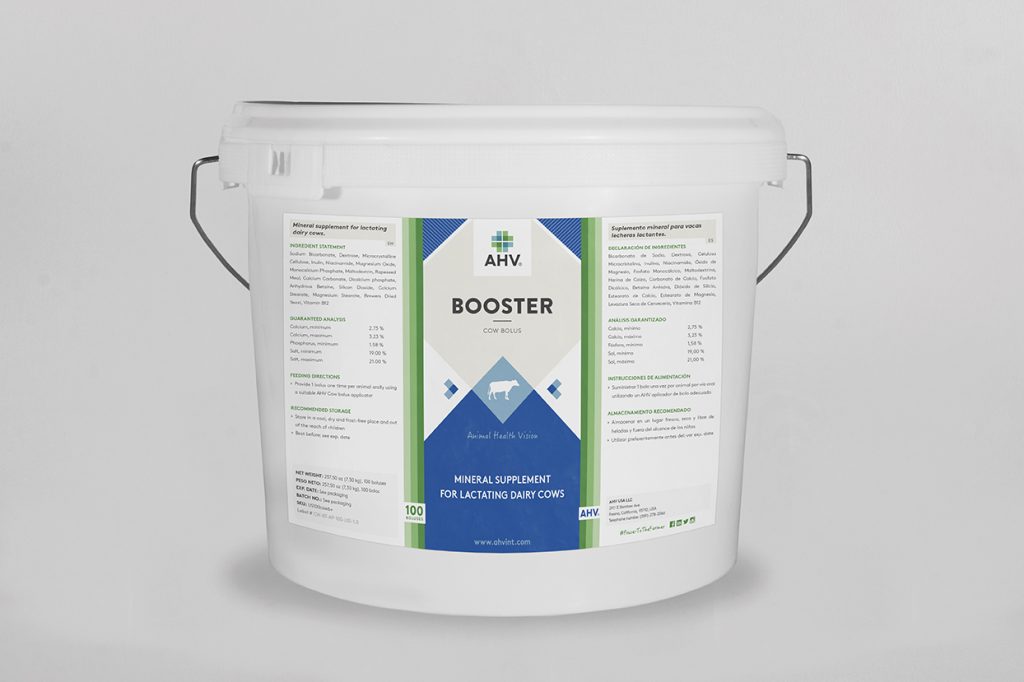
Booster Bolus
Get in touch!
Would you like to be visited by an advisor to discuss the health challenges on your farm together? Our AHV Farm Advisor will be happy to visit you to jointly assess the health of your cows and come up with appropriate cow-specific advice.

US – Get in touch
"*" indicates required fields