
Summer is coming! 7 tips for keeping your dairy cattle healthy
The official summer starts on 21 June, but the past few weeks have already seen a number of warm days and there are many more to come. As temperatures and humidity rise, so does the risk of challenges for your herd. In the coming weeks, we would like to discuss all aspects of energy & metabolism with you. We will start with the energy balance during warm periods.
When does the combination of temperature and humidity create challenges?
The effect of the heat is not always immediately visible and can sometimes last up to ten days. It is therefore important to act proactively during a warm period. For the cow, the ideal ambient temperature is between -5 and 18 degrees Celsius (23 degrees to 64.4 degrees Farehnheit). The heat can already have an impact on the cow at a temperature of 20 degrees (68 degrees F) and an air humidity of between 60 and 80 % (see image below). With lower humidity, the chance of situations where stress can be expected is less. In an environment that is too warm, the cow must spend extra energy on keeping its body temperature constant. Although the impact on the cow is not immediately visible, she certainly experiences it to some degree.
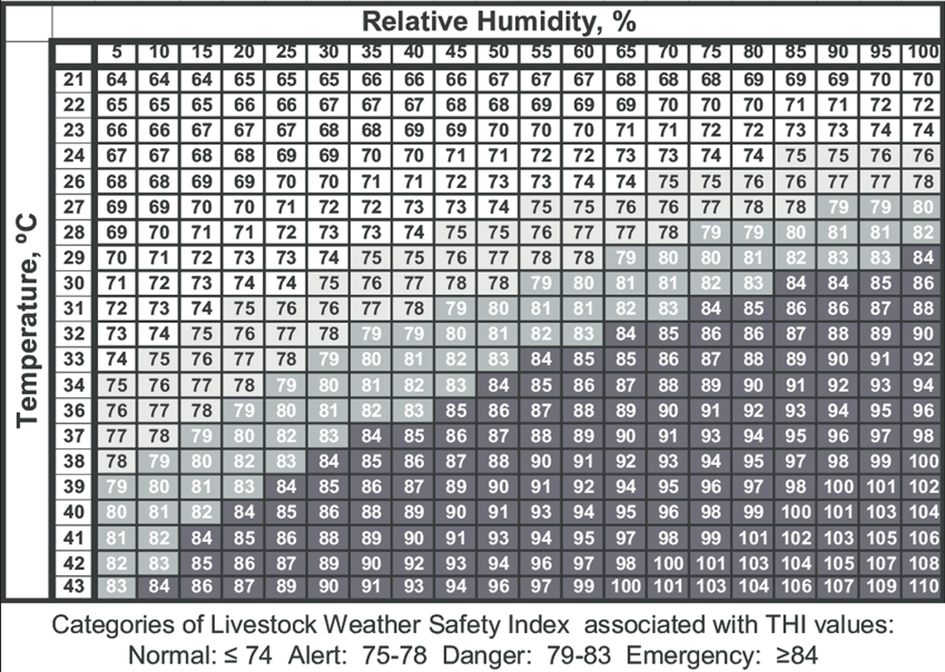
Seven points of attention for your dairy cattle during warmer weather
To help you and your herd get through the warm periods, we have listed seven points of attention during warm weather. We are happy to share them with you below:
1. Start with a clean environment
Hygiene plays a key role in animal health. A clean-living environment is a prerequisite for optimal performance of your dairy cattle. Especially in the warmer periods, it is important to keep your dairy cattle’s living environment clean, because bacteria can spread even faster then. Having a clean environment will ultimately pay off in a better health status and higher milk production. T
2. Keep an eye on the claws
As a dairy farmer, you often see cows standing longer in high temperatures. This is because they are better able to show heat. This has consequences for the claws, which are subjected to more strain. If they eat less and suffer from an energy deficit, the fatty pads between the claws and the horny tissue also becomes thinner. The result is that challenges to claw health can occur. It is important to continue to pay close attention to the inactive time and rumination activity of your dairy cattle.

3. Availability of drinking water
One of the most important nutrients for the cow is water. During warm periods, a cow can drink up to 200 litres (53 gallons) per day. The time a cow spends drinking is doubled during this period. Wherever there is a crowd around drinking troughs, the chance of hierarchy problems increases. It is important that there is always sufficient clean and tasty water available and accessible. The optimum water temperature is around 17 degrees Celsius (62.6 degrees F).
4. Sufficient feed intake for good milk production
Everything a cow does costs energy and heats her up. The ruminating process also consumes a lot of energy, which means that a cow will sometimes eat less in warmer periods. This is an indicator to keep an eye on, because if feeding time and rumination activity decreases, this can cause challenges.
5. Measuring the respiratory rate
Cows are able to dissipate heat by sweating, drooling and panting. The degree of impact this has on them due to the environment can be read by measuring the respiration frequency. This can be done by observing the cow and looking at the indicators below. We will go into this in more detail later, in a subsequent article.
| Degree of stress | Breathing frequency |
| Stress threshold | > 60 x per minute |
| Mild to moderate | > 75 x per minute |
| Moderate to severe | > 85 x per minute |
| Severe | > 120 x per minute |

6. Recognize and monitor at-risk animals
Animals that are particularly at risk in high temperatures are fresh cows, high yielding cows and dry cows. Why they are at risk is explained in more detail in the article “Energy balance during warm weather”.
7. Don’t forget the dry cows!
As we mentioned earlier, maintaining body temperature takes a lot of energy, leaving little for other bodily functions that also require energy. The calving process requires a lot of energy, so an extra energy boost about two weeks before calving and one day after calving is strongly recommended. This is especially important on warmer days. Are you curious about our advice for warmer weather? Ask your Farm Advisor or read the article “Energy balance during warm weather“.
Proactive support around energy & metabolism
Below we show the protocol we recommend for optimal energy & metabolism. By clicking on the picture you will see more information about the product. However, we always recommend using the products in a program for optimal results.
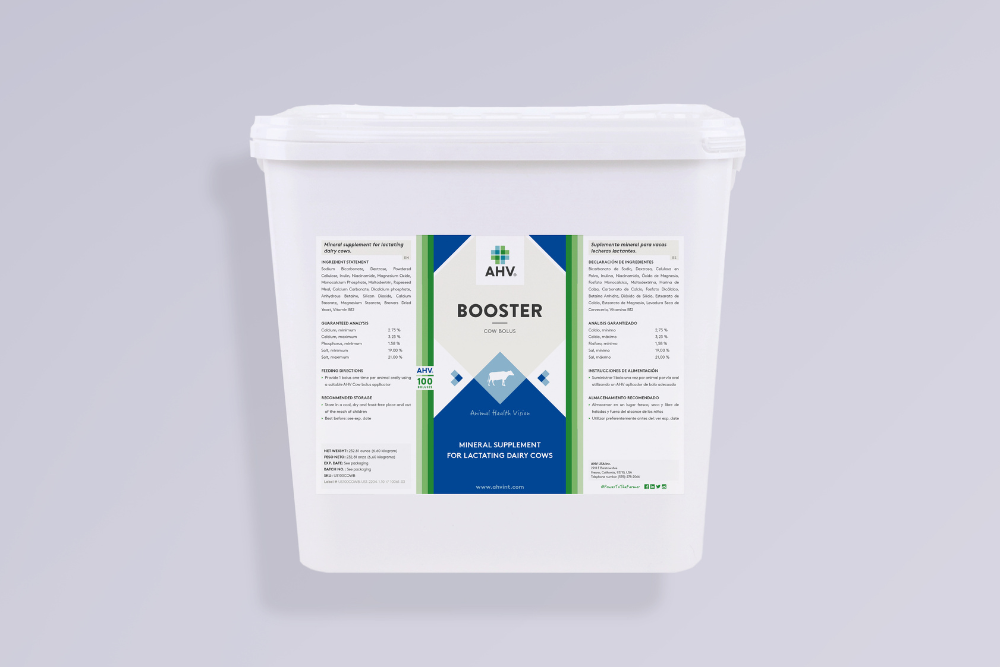
Booster Bolus
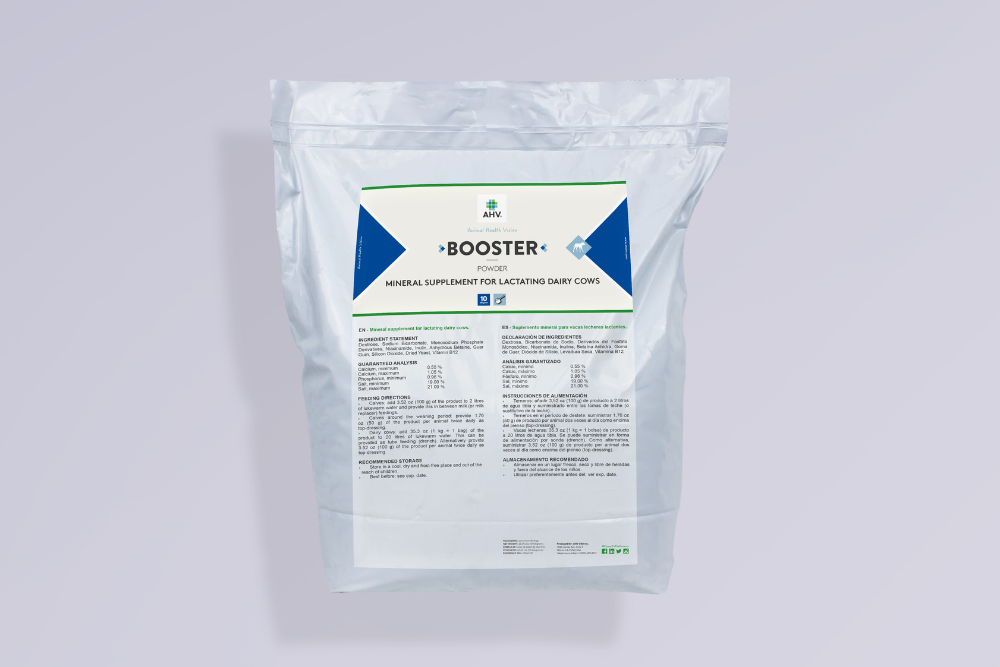
Booster Powder
Get in touch!
Would you like to be visited by an advisor to discuss the health challenges on your farm together? Our AHV Farm Advisor will be happy to visit you to jointly assess the health of your cows and come up with appropriate cow-specific advice.

US – Get in touch
"*" indicates required fields